
The Future Belongs to Those Who Remain Human
Five Lessons from 2045 – and the Human Qualities That Will Define the Leaders of Tomorrow
An invitation to rethink intelligence, leadership, trust and our responsibility to the generations that will follow us.
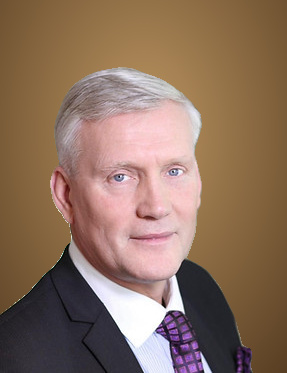
By Björn Söderberg, Co-Founder & CEO, Salvator Mundi Global
A MESSAGE FROM THE FUTURE
22 November 2045. A message to humanity, sent back twenty years to 22 November 2026.
Imagine that someone could travel twenty years into the future and return with a message for us today.
What would they tell us?
Perhaps they would speak about extraordinary technological achievements, artificial intelligence that transformed entire industries, medical breakthroughs, new economic opportunities and a world more interconnected than ever before.
But perhaps their most important message would have very little to do with technology.
Perhaps they would tell us that humanity's greatest challenge was never simply to develop more intelligent machines.
It was to become wiser human beings.
We are living through one of the most significant transformations in human history. Artificial intelligence is changing how we work, communicate, learn, create and make decisions. Entire professions will evolve, some will disappear, and new opportunities will emerge that we can barely imagine today.
Understandably, many people are concerned.
They worry about their jobs, their economic security, their children's future and whether human beings will retain their place in an increasingly automated world.
These concerns deserve serious attention.
But I believe we should ask a different and perhaps more important question:
As machines become increasingly intelligent, what must we do to ensure that humanity becomes increasingly wise?
My conviction is that our greatest advantage in the future will not simply be what we know, but who we are, how we treat others and what we take responsibility for.
1. THE HUMAN ADVANTAGE: THREE QUALITIES THAT WILL DEFINE OUR FUTURE
Artificial intelligence will increasingly outperform humans in processing information, identifying patterns, analysing data and executing complex tasks.Trying to compete with machines on speed, memory and computational capacity is unlikely to be a winning strategy.
Instead, we should develop the qualities that allow us to use technology intelligently while retaining human responsibility.
I believe three capabilities will become particularly important.
WISDOM – Understanding what should be done.
AI can provide answers, evaluate alternatives and recommend solutions. But technical capability does not automatically establish what is morally right.
Human judgement must consider consequences, fairness, human dignity and long-term responsibility.
It requires the courage to say no, even when an opportunity appears financially attractive.
There is an important distinction between knowing what can be done and understanding what should be done.
The future needs people who understand that distinction.
HUMANITY – Building trust and bringing people together.
Technology can connect billions of people, but connection is not the same as trust.
Real human relationships require empathy, integrity, listening, understanding and the courage to stand by our principles when circumstances become difficult.
The most valuable leaders will not necessarily be those who speak the loudest or command the greatest influence.
They will be those who create environments in which others feel respected, trusted and empowered to contribute.
We should remember a simple principle:
Listen to understand, not merely to respond.
In an increasingly digital world, genuine human connection may become one of our most valuable assets.
ADAPTABILITY – Creating opportunities in a changing world.
Knowledge is becoming more accessible, and established professional skills can become outdated faster than previous generations experienced.
Education must therefore become a lifelong process.
We must learn to question established assumptions, combine knowledge from different disciplines, embrace creativity and work effectively with artificial intelligence.
But adaptability should never mean abandoning our fundamental values.
We must be capable of changing how we work without losing sight of why we work.
The combination of wisdom, humanity and adaptability will be essential to responsible leadership in the decades ahead.

2. WHAT DOES THE RESEARCH TELL US?
These observations are not simply philosophical reflections.
The World Economic Forum's Future of Jobs Report 2025 provides important supporting evidence.
Based on its survey of more than 1,000 employers representing over 14 million workers across 55 economies, the report identifies the following as the three most frequently recognised core skills for today's workforce:
Analytical thinking – 69%.
Resilience, flexibility and agility – 67%.
Leadership and social influence – 61%.
Creative thinking follows at 57%, while empathy and active listening, and curiosity and lifelong learning, each rank at 50%.
The report also identifies AI and big data, technological literacy, creativity and adaptability among the skills expected to grow in importance.
These figures reflect employer assessments, not a definitive prediction of what humanity will need in 2045. Nevertheless, they offer an important indication of the direction in which the world of work is moving.
One conclusion stands out:
The challenge is not simply to educate people to work alongside AI. It is to prepare people to remain responsible for the decisions that AI helps them make.
There is a fundamental difference between technological capability, human accountability and moral responsibility.
Just because artificial intelligence can perform a task does not mean that it should be entrusted with the final responsibility for its consequences.
3. FIVE LESSONS FROM 2045: A MESSAGE TO HUMANITY
If I could look back from 2045 and offer five pieces of advice to people living in 2026, these would be my recommendations.
LESSON ONE: DO NOT FEAR THE FUTURE. FEAR LOSING YOUR HUMANITY.
Do not waste your energy trying to compete with machines.
Learn to work with them. Let artificial intelligence expand your capabilities, improve your understanding and create opportunities that previous generations could only dream of.
But never surrender your conscience, independent thinking or personal responsibility.
Remember:
Intelligence can be artificial.
Knowledge can be accessed.
Information can be generated.
But wisdom must be developed.
Trust must be earned.
Character must be demonstrated.
Never allow technology to become more important than the human beings it was created to serve.
LESSON TWO: PROTECT TRUST. IT WILL BECOME MORE VALUABLE THAN MONEY.
Societies can recover from financial crises. Businesses can rebuild. Cities and infrastructure can be restored.
But rebuilding trust is considerably more difficult.
Trust between families, citizens and institutions, nations, business partners and generations is fundamental to a functioning society.
Do not confuse influence with leadership, popularity with respect or wealth with success.
Keep your promises. Tell the truth, especially when it is uncomfortable. Treat people fairly, particularly when you have more power than they do.
A person's true value is not measured by how many people serve them, but by how many people become stronger because of them.
LESSON THREE: CHOOSE COOPERATION OVER DIVISION.
Our world has enough borders, conflicts, competing interests and ideological divisions.
We do not need to agree on everything to work together.
We must learn to disagree without becoming enemies.
Build bridges where others build walls. Listen to people whose experiences differ from your own.
Teach the next generation that another person's success does not require their failure.
The greatest challenges facing humanity – health, education, poverty, environmental sustainability and responsible technology – cannot be solved by one country, one company or one generation.
They require cooperation.
We must move beyond an "us versus them" mentality towards a shared understanding of "we".
Humanity is not a competition between nations.
It is a shared responsibility.

LESSON FOUR: INVEST IN PEOPLE, NOT JUST TECHNOLOGY AND CAPITAL.
Technological innovation and financial investment are important engines of progress.
But they are not the ultimate purpose of progress.
Our most important investments must also include education, independent thinking, health, human dignity, ethical leadership, families, communities and the potential of young people.
Give the next generation more than money and infrastructure.
Give them values, opportunities, knowledge and the freedom to question.
Teach them to be curious rather than arrogant, courageous rather than aggressive, and successful without losing their compassion.
The greatest legacy is not simply what you leave behind.
It is what continues to grow because of what you did.
LESSON FIVE: THINK SEVEN GENERATIONS AHEAD – AND START ACTING TODAY.
Perhaps this is the most important lesson of all.
Our decisions today will influence the opportunities, freedoms and quality of life available to generations we will never meet.
Before making an important decision, ask:
Is this good for humanity, or only profitable for a few?
Does it protect the dignity and opportunities of future generations?
Are we creating opportunities or transferring problems to our children?
Would we be proud if our grandchildren knew how we made this decision?
We must learn to think beyond quarterly results, political terms and personal ambitions.
Think in generations.
We do not own the future.
We are its temporary guardians.
4. A NEW DEFINITION OF LEADERSHIP
These five lessons lead us to a fundamental question:
What should we value when choosing the leaders who will shape our future?
For too long, leadership has often been measured through titles, financial results, influence, education, institutional power and the ability to achieve short-term objectives.
These measures can be relevant, but they are not sufficient.
In the age of artificial intelligence, we need a more complete understanding of leadership.
A truly capable leader must combine:
Intelligence – to understand complexity and recognise opportunities.
Wisdom – to distinguish what is possible from what is right.
Integrity – to act consistently with one's principles.
Empathy – to understand and respect the experiences of others.
Courage – to make responsible decisions, even when they are unpopular.
Accountability – to accept responsibility for decisions and their consequences.
There is another important principle that deserves our attention:
The more knowledge we acquire, the less room there should be for ego.
Knowledge should make us more curious, not more arrogant. Greater understanding should encourage humility, not superiority.
The more we learn, the more we should recognise how much remains to be understood.
This is not an argument against technology, ambition, financial success or economic development.
Quite the opposite.
It is an argument for ensuring that all these capabilities serve a greater purpose.
We need innovation guided by ethics, capital guided by responsibility and leadership guided by human dignity.
At Salvator Mundi Global, we believe that sustainable progress requires the integration of three essential dimensions:
BRAIN. HEART. CAPITAL.
Brain represents knowledge, intelligence, innovation and strategic thinking.
Heart represents humanity, empathy, integrity and respect for human dignity.
Capital represents the financial and institutional resources required to turn meaningful ideas into practical results.
Knowledge without wisdom can be misused. Good intentions without the resources to act may remain only ideas. Capital without responsibility can create progress for a few at the expense of many.
When these three dimensions work together, we create better conditions for progress that is economically sustainable, socially meaningful and ethically responsible.
This is the kind of leadership our world needs.

5. WHAT MUST WE TEACH THE NEXT GENERATION?
Perhaps the most important responsibility of our generation is to reconsider what we teach our children and how we prepare future leaders.
We should not educate young people simply to compete with artificial intelligence over who can produce more, faster and cheaper.
Instead, we should prepare them to:
Think independently and question information, including answers generated by AI.
Build relationships and trust across cultural, social and national boundaries.
Take responsibility for decisions that affect other people and future generations.
Remain curious, creative and adaptable throughout their lives.
Use technology as a tool for human progress rather than allowing technology to define human values.
Of course, technological literacy will be essential.
But technical competence without judgement can create risks. Intelligence without integrity can become destructive. Power without accountability can undermine the very societies it is intended to serve.
We must therefore invest as much in character, wisdom and ethical leadership as we do in technological advancement.
The future should not belong exclusively to those who understand machines.
It should belong to those who understand both machines and human beings.
6. FIVE PRINCIPLES HUMANITY SHOULD NEVER FORGET
If we were to reduce these reflections to five enduring principles, I would propose the following:
HUMANITY Never lose what makes you human.
TRUST Be truthful. Keep your promises.
UNITY Build bridges, not divisions.
LEGACY Invest in people and future generations.
RESPONSIBILITY Think seven generations ahead.
These principles are not intended to belong to one organisation, political system, religion or generation.
They are principles that can bring people together despite their differences.
They should guide how we lead, how we invest, how we govern and how we treat one another.
For Salvator Mundi Global, they also represent an important foundation for turning ethical leadership into practical action.
Our ambition should be to help create institutions, partnerships and initiatives that continue to serve humanity long after their founders and current leaders have moved on.
Because the ultimate measure of an institution should not only be what it achieves during the lifetime of its founders.
It should also be what it enables future generations to achieve.
A FINAL MESSAGE FROM 2045
Dear people of 2026,
There is something I wish you had understood earlier.
You spent so much time worrying about what the future would take away from you that you sometimes forgot what you already had.
You had the ability to love, to forgive, to create, to learn, to help and to begin again.
You had the power to change direction.
You did not need to be perfect.
You needed to be willing to become better.
Do not wait for the world to become peaceful before you become peacemakers.
Do not wait for the world to become fair before you act fairly.
Do not wait for the future to become certain before you invest in the next generation.
And do not wait for someone else to become the leader you wish to see.
Begin with yourselves.
Begin with your families.
Begin with your communities.
Begin today.
For the future is not something that simply happens to humanity.
It is something humanity creates – together.
ONE FINAL QUESTION FOR OUR GENERATION
As we stand at this extraordinary turning point in human history, I would like to leave readers with one question:
When the people of 2045 look back at our generation, what would we want them to thank us for?
Not how much money we accumulated.
Not how powerful we became.
Not how many technologies we developed.
But whether we left behind a world that was more humane, more peaceful, more trustworthy and more hopeful than the one we inherited.
Perhaps that is the most important measure of success.
Perhaps that is the real meaning of leadership.
And perhaps that is the responsibility we all share.
FAITH. TRUTH. UNITY. ACCOUNTABILITY. HOPE.
Knowledge. Wisdom. A Better Tomorrow.
For today's generation – and the seven generations yet to come.
Björn Söderberg
Co-Founder & CEO, Salvator Mundi Global
Editorial note: The Oracle of 2045 is a thought experiment intended to encourage reflection on humanity, leadership and responsible technological development. It is not presented as a literal prediction.
About the Author

Björn Söderberg
Co-Founder & CEO, Salvator Mundi Global
Björn Söderberg is Co-Founder and Chief Executive Officer of Salvator Mundi Global, a global network working to help five million people toward a better life, guided by responsibility to the seven generations that follow.


Comments