
The man who wants to unite the world through music

Updated: 2 days ago
From the boardroom to the recording studio: how Dr Metin Oktay is using artificial intelligence, human emotion and the universal language of music to bring cultures closer together.
By Shlomi Selim “Sally” Benbasat
Interview, Salvator Mundi Times
Reinvention is a word we use too easily. It usually describes a change of job. It is rarer to see someone take decades of experience in international business and use it to start something new and personal.
Dr Metin Oktay writes for Salvator Mundi Times and chairs the Global Council on Media and Communication at Salvator Mundi Global. He is also M3TIN, a songwriter, composer and the founder of the independent label M3TIN Records.
His idea is simple to state and hard to do. A song is written once and then adapted for each language, so that the feeling survives the journey. Artificial intelligence is one of the tools he uses, and he is open about it.
The questions cover what drives this, where he draws the line between tool and artist, and why a German single carries one line in Turkish. The song discussed here, "Das waren wir nie", is linked on Spotify and YouTube after the interview.
What happens when a successful international business executive decides that the next chapter of his life should not be about business, but about something deeply personal?
For Dr Ahmet Metin Oktay, the answer was music.
After decades working across countries, cultures and international business environments, he chose a different path. He founded his independent record label, M3TIN Records, and began creating music under the artistic identity M3TIN.
But there is something unusual about his ambition.
He does not simply want to write songs. He wants to create music that travels across borders without losing its emotional meaning.
A story originally imagined in one language can be reborn in another, not through literal translation, but through an understanding of how people from different cultures express the same feelings.
And he is using modern technology, including artificial intelligence, to help bring this vision to life.
The results are already attracting attention. M3TIN has released recordings in a number of languages through digital platforms.
On 23 October 2026 comes another milestone: the release of his first German-language single, Das waren wir nie (That Was Never Us).
Dr Oktay also serves as Chairman of the Global Council on Media and Communication at Salvator Mundi Global. The questions below cover reinvention, creativity, artificial intelligence and his belief that music can connect people in ways that politics, business and sometimes even language cannot.
From international business to music

Sally: Metin, you spent decades in the international business world. Now you are writing songs, composing music and running your own record label. What happened? Was there a particular moment when you decided to change your life?
Dr Metin Oktay: My professional life took me through different countries and cultures. I was born in Turkey, educated in the United States and England, and lived and worked in places where the people around me often spoke a different mother tongue.
Over time, I became fascinated by something: despite all our cultural differences, our deepest human emotions are remarkably similar.
We all know love. We all know disappointment, longing, loss and hope.
What changes is how we express those feelings.
Music became a way for me to explore that observation creatively. M3TIN is the result of that journey.
Sally: Many executives, after a long career, choose retirement, consulting or perhaps another business venture. You chose music. Did you have to rediscover yourself?
Dr Metin Oktay: I see it less as abandoning one life and more as bringing everything I experienced into another form.
Working internationally teaches you to listen, to understand different perspectives and to recognize that the same message can mean different things in different cultural contexts.
Those lessons are central to the way I now create music.
The medium has changed, but the importance of understanding people has remained.
One artist. Many voices.

Sally: Your concept is fascinating. You create songs in different languages, but you insist that these are not simply translations. What exactly is the difference?
Dr Metin Oktay: This is probably the most important distinction in the entire project.
We don’t translate. We adapt — the way hearts adapt.
Imagine a sentence in Turkish that expresses heartbreak. If you translate it word for word into German, French or Spanish, the words may be technically correct, but the emotion may disappear.
Every language has its own emotional vocabulary, its own images and its own way of expressing tenderness, disappointment or goodbye.
My ambition is to preserve the heart of the song while allowing each language to express that heart naturally.
The melody, story and emotional meaning remain connected. But the words must belong to the culture in which they are sung.
Sally: So, in a way, you are trying to demonstrate that people from completely different backgrounds feel the same emotions?
Dr Metin Oktay: Exactly. That is the idea behind our philosophy: Many tongues. One heart. Music speaks them all.
We may disagree about many things in this world. Our histories, traditions and perspectives may be different.
But when a song touches something deeply human, we recognize ourselves in it.
And perhaps that recognition is a small beginning of greater understanding.
Artificial intelligence and the human soul

Sally: Artificial intelligence is transforming the music industry. Some musicians consider it a threat to creativity. You have embraced it. Why?
Dr Metin Oktay: I believe we need to distinguish between the technology and the person using it.
The brush isn’t the painter. The tool isn’t the artist.
I write the words, shape the melodies, design the atmosphere and determine the artistic direction of every release.
Modern production tools, including AI, help me realize that vision.
But technology does not decide what I want to say, why a particular emotion matters or whether a lyric genuinely connects with someone who speaks that language.
Those remain human responsibilities.
Sally: Does that mean you believe AI can actually make creativity more accessible rather than replacing human creativity?
Dr Metin Oktay: I believe these tools can open creative possibilities that were previously difficult to realize independently.
But accessibility should never be confused with authorship.
For me, the important questions are: Who created the idea? Who made the artistic decisions? Who takes responsibility for the final work?
I am transparent about using AI and modern production technology.
Technology helps me build the music. Human judgment gives it meaning.
Why Germany? Why now?
Sally: On 23 October you are releasing your German single, Das waren wir nie. What makes this particular release special?
Dr Metin Oktay: This song belongs to a family of songs built around the Turkish expression Yakışmadı bize.
It is difficult to translate that expression precisely. It carries disappointment, tenderness, wounded pride and the feeling that two people were capable of something better than the way their relationship ended.
In German, we found the emotional expression Das waren wir nie — That was never us.
The song is not about a dramatic argument. It is about the slow disappearance of warmth between two people.
It is about realizing that something you built together has been damaged by the very people who created it.
And it is about trying to say goodbye without losing your dignity.
Sally: There is a particularly interesting artistic detail: even in the German version, you retain a Turkish line. Why?
Dr Metin Oktay: At the end of the song, the words Yakışmadı bize appear in Turkish.
That is intentional.
The entire story has been told in German. But at the most vulnerable moment, the original mother tongue returns.
It is almost as though the emotional mask falls away and the deepest voice underneath becomes audible.
The same Turkish line will connect the different versions of this song family.
It is a small detail, but it represents something essential about the project: languages can change, while the emotional truth remains.
Berlin-Kreuzberg: Where two cultures meet

Sally: The music video is set in Berlin-Kreuzberg and tells the story of a German woman and a Turkish man. Why did you choose that setting?
Dr Metin Oktay: Berlin-Kreuzberg is a place where German and Turkish cultural experiences have lived alongside one another for generations.
It provides a natural setting for the story we wanted to tell.
The video follows two people through memories of their relationship and the emotional distance that eventually develops between them.
There are familiar moments: sharing tea, spending time together, building a life.
And then there is the realization that the same two people have become strangers.
It is a German-Turkish story, but the emotions are not limited to Germany or Turkey.
That is precisely the point.
A global audience without borders
Sally: M3TIN has built a catalogue of 23 releases. Did you expect this kind of response?
Dr Metin Oktay: The project developed quickly. It became increasingly international.
What has been particularly encouraging is that the audience has grown largely organically.
The songs are reaching people from very different linguistic and cultural backgrounds.
For me, the most meaningful aspect is not simply the number of views. It is the possibility that people who may never have encountered one another’s cultures are connecting through a shared emotional experience.
That is the real ambition behind M3TIN.
Sally: Most artists begin in their home country and then try to become international. You seem to be doing the opposite. Why?
Dr Metin Oktay: We call this approach Homecoming last.
The project began internationally, across languages including Kazakh, Khmer, Arabic, French, Portuguese and Spanish.
The Turkish original of our new song family is planned for 2027.
In that sense, the journey begins in the world and eventually returns home.
I like that symbolism because it reflects my own international experiences.
You can discover many cultures without losing your roots. Sometimes the journey helps you understand those roots even more deeply.
Can music bring the world closer together?
Sally: You are also Chairman of the Global Council on Media and Communication at Salvator Mundi Global, an organization built around ethical leadership and connecting people across borders. Do you see a connection between that mission and your music?
Dr Metin Oktay: I see a natural connection in the importance of human understanding.
Media, communication and music all influence how people see the world and one another.
Technology has made it easier than ever to communicate globally, but communication alone does not necessarily create understanding.
We also need empathy, cultural sensitivity and a willingness to recognize the humanity of others.
Music offers one way of creating that connection.
It reaches people emotionally, often before intellectual or cultural differences become barriers.
Sally: Finally, Metin, imagine someone listening to one of your songs in Germany, another person listening in Kazakhstan and a third person in Brazil. They do not speak the same language, may never meet and have completely different lives. What would you hope they share?
Dr Metin Oktay: I would hope that each of them feels that the song belongs to them.
Not because the words are identical, but because the emotion is recognizable.
If someone in Germany hears Das waren wir nie and someone elsewhere hears the same story in their own language, perhaps both will recognize something from their own lives.
That moment of recognition is what matters to me.
Different tongues. One heart.
And music speaks them all.
Beyond the music
There is something deeply symbolic about Metin Oktay’s journey.
A man who spent much of his professional life navigating international business relationships is now exploring the relationships that connect human beings at a more fundamental level.
His new venture is also a reminder that reinvention does not belong exclusively to the young.
Experience can become the foundation for an entirely new creative chapter. And technology, when directed by human imagination and responsibility, can help make that chapter possible.
At a time when the world often appears increasingly divided by politics, nationality, religion and language, M3TIN is pursuing a simple but meaningful idea:
Perhaps we do not need to speak the same language to understand one another. Perhaps we simply need to feel the same song.
Das waren wir nie is released on 23 October 2026 on streaming platforms.
Discover M3TIN: m3tinrecords.com
Spotify
YouTube
About Dr Metin Oktay and M3TIN

Dr Ahmet Metin Oktay
Songwriter, composer, music producer and founder of M3TIN Records
Dr Oktay is the founder of the independent label M3TIN Records and creates music as M3TIN. He serves as Chairman of the Global Council on Media and Communication at Salvator Mundi Global.
About the Author
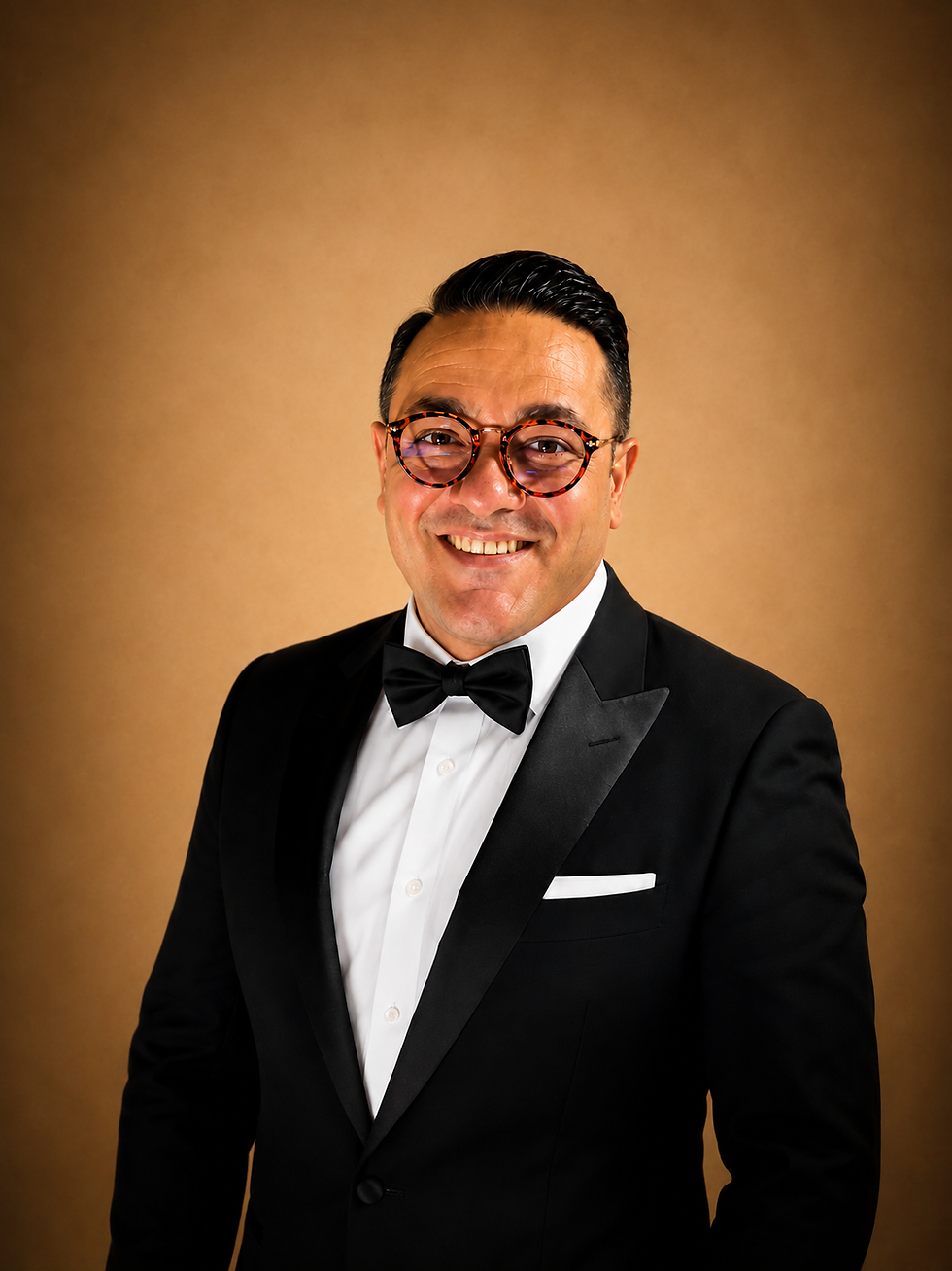
Shlomi Selim “Sally” Benbasat
Editor in Chief, Salvator Mundi Times
Serial entrepreneur and investor in B2B e-commerce, carbon markets and emissions reduction, chemicals and raw materials trading, EPC, technology, telecommunications, digital media and real estate, with ventures built and exited across Europe, LATAM, the Middle East and Asia.


Comments