
The Spirit of Global Benefit: What Future Global Entrepreneurs Must Embrace
Updated: 4 days ago
Beyond National Interest: Entering the Era of Global Benefit
We are living in an age of VUCA—Volatility, Uncertainty, Complexity, and Ambiguity.
Yet the true challenge of our era extends far beyond business uncertainty. Humanity itself is confronting a growing number of interconnected global crises: climate change, natural disasters, pandemics, food insecurity, energy shortages, demographic shifts, and geopolitical tensions. These challenges cannot be solved by any single nation acting alone.
In such an era, humanity can no longer afford to spend its energy fighting itself.
According to the United Nations Office for Disaster Risk Reduction (UNDRR), the number of major disasters recorded worldwide reached 7,348 between 2000 and 2019, a dramatic increase compared to the previous two decades. These disasters affected more than 4.2 billion people and caused economic losses exceeding USD 3 trillion.
The World Meteorological Organization (WMO) further reports that weather-related disasters have increased approximately fivefold over the past fifty years due to climate change and extreme weather events.
The Intergovernmental Panel on Climate Change (IPCC) has also concluded that human-induced climate change has increased both the frequency and intensity of extreme events, including heatwaves, floods, droughts, wildfires, and tropical cyclones.
We are no longer living in a world where the future can be predicted by simply extending past trends.
Challenges That National Interests Alone Cannot Solve

Nations remain important institutions.
However, climate change does not recognize borders.
Pandemics do not recognize borders.
Cybersecurity threats do not recognize borders.
The risks associated with artificial intelligence do not recognize borders.
A worldview centered solely on national interest is insufficient for addressing humanity’s shared challenges.
Yet many political leaders remain constrained by short-term electoral cycles, domestic pressures, and geopolitical competition. While nations debate and compete, global challenges continue to accelerate.
The question before us is no longer whether we should choose between national interest and global benefit.
Rather, national interests can only be protected if global interests are protected first.
A destabilized world ultimately threatens every nation.
Without global stability and peace, sustainable economic prosperity becomes impossible.
Entrepreneurs as Scheme Creators

History shows that transformative societal change is not always driven by governments.
More often, it is driven by entrepreneurs who create entirely new systems and frameworks.
The entrepreneurs of the Industrial Revolution reshaped economies.
The pioneers of the Internet transformed communication.
The innovators behind smartphones fundamentally changed how humanity lives and interacts.
These individuals were not merely businesspeople.
They were creators of new systems—Scheme Creators—and changemakers who redefined the rules of society itself.
The entrepreneurs of the future must play a similar role.
The difference is that their mission can no longer stop at personal achievement or corporate success.
From the earliest stages of a startup, entrepreneurs must aspire to create value not only for shareholders but for humanity.
What Is the Spirit of Global Benefit?
The Spirit of Global Benefit is not the rejection of personal, corporate, or national interests.
Rather, it is the ability to align those interests with the long-term interests of humanity.
This is not idealism.
It is pragmatic leadership.
Consider some of the most important growth sectors of the twenty-first century:
• Decarbonization technologies
• Clean energy solutions
• Medical innovation
• Food security systems
• AI governance and safety
• Educational accessibility
• Water resource management
The organizations that successfully address these global challenges are also likely to create the largest and most sustainable markets.
Global benefit and corporate value are not opposing forces.
In many cases, they are becoming increasingly inseparable.
The enterprises that create the greatest positive impact on humanity will often become the most valuable enterprises of the future.
Seeing the Forest, Not Just the Trees

The leaders required for the coming decades must possess a broader perspective than ever before.
It is no longer enough to focus on immediate profits.
Leaders must see the forest, not merely the trees.
They must look beyond their own organizations to understand entire industries.
Beyond their own nations to understand the world.
Beyond quarterly performance to understand future generations.
The future belongs not to those who optimize individual parts, but to those who optimize entire systems.
This requires the ability to think holistically, integrate diverse perspectives, and connect people across cultures, disciplines, and borders.
I refer to this approach as Integrator Leadership.
An Integrator Leader connects knowledge, capital, technology, and human talent from around the world to address humanity’s most pressing challenges.
Conclusion

As we move deeper into the twenty-first century, humanity faces transformations unprecedented in scale and speed.
The AI Revolution.
Climate change.
Demographic transformation.
The global energy transition.
Geopolitical realignment.
None of these challenges can be solved by a single company or a single country.
This is precisely why future global entrepreneurs must embrace the Spirit of Global Benefit.
They must move beyond self-actualization.
Beyond corporate profit.
Beyond national interest.
They must accept responsibility for the future of humanity itself.
The entrepreneurs who adopt this perspective will become the Scheme Creators of the next era.
They will design the systems, institutions, and innovations that shape the future.
Ultimately, the entrepreneurs who change the world will be those who choose to act not only for themselves, not only for their nations, but for the benefit of the world.
About the Author

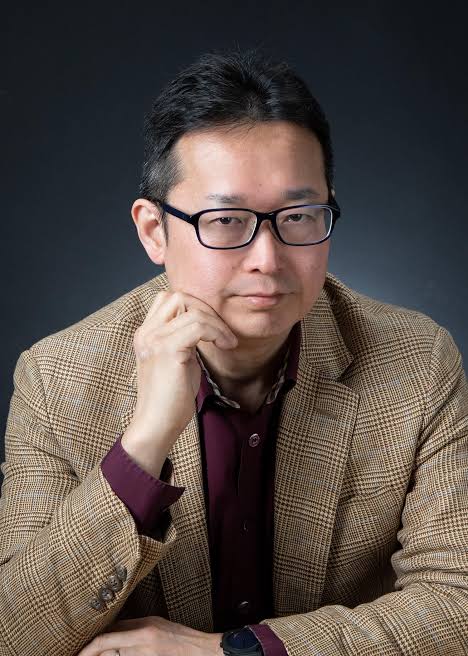
Dr. Takahisa Karita
Chairman of the Global Council of Entrepreneurial Mentorship, Salvator Mundi Global
Takahisa Karita is Co-Founder and CFO/COO of UNIPLAT, a global platform connecting researchers, entrepreneurs, investors, and innovators across more than 140 countries. He is a member of Forbes Business Council, Advisory Board Member of the Peace-Led Climate Friendly Sustainable Development Forum, and Japan Head of the BRICS Cooperation Hub. Takahisa specializes in global entrepreneurship, international venture development, and building cross-border innovation ecosystems.


Comments