
Friendship And Prayer As Pathways To Peace
Updated: 4 days ago
Standfirst: Friendship without prayer is fragile. Prayer without friendship is incomplete. They are the two feet upon which humanity walks toward peace.
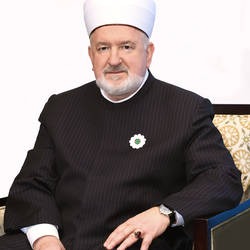
By Mufti Dr. Mustafa Cerić, Grand Mufti Emeritus of Bosnia and HerzegovinaAddress delivered in Assisi, 6 August 2026, at the inauguration of the Global House of Friendship and Hope
In the Name of God, the Most Compassionate, the Most Merciful.
Dear Rabbi Alon,
Distinguished religious leaders,
Dear brothers and friends,
It is a profound honor to stand with you today in Assisi, a city whose very name has become synonymous with peace.
We gather not merely to inaugurate a new building. We gather to affirm an ancient truth: that peace begins wherever friendship is born and wherever prayer is sincerely offered.
If I were asked what our fractured world needs most today, my answer would be simple: We need more friendship among human beings. More prayer before Almighty God.
For friendship without prayer easily becomes fragile, because it depends only on human goodwill.
And prayer without friendship becomes incomplete, because the God whom we worship commands us not only to love Him but also to love His creation.
Thus, friendship and prayer are not two separate roads.
They are the two feet upon which humanity walks toward peace.
The Global House of Friendship and Hope has been created to remind us of precisely this truth.
I wish to express my heartfelt gratitude to Rabbi Dr. Alon Goshen-Gottstein, Executive Director of the Elijah Interfaith Institute and one of the world's leading figures in interreligious dialogue, and to all those whose vision and perseverance have transformed this noble dream into reality.
Having visited this House myself, I can testify that it possesses something increasingly rare in our world. It offers sacred space, not for theological competition, but for spiritual encounter; not for the victory of one tradition over another, but for the victory of the human soul over fear, prejudice, and loneliness.

In every authentic religious tradition, friendship is never merely social. It is sacred. Abraham was called the Friend of God. Moses spoke with God as one friend speaks to another. Jesus called his disciples friends.
The Prophet Muhammad, peace be upon him, taught that a believer is the brother and friend of another believer and that all humanity descends from one father and one mother.
These are not isolated religious memories. They form a shared spiritual heritage.
Indeed, perhaps God did not create us different in order to test our ability to defeat one another, but our willingness to befriend one another.
The Holy Qur'an proclaims: O humankind, God created you from a male and a female and made you into nations and tribes so that you may come to know one another. Indeed, the most honored among you in the sight of God is the most righteous. (Al Hujurāt, 49:13).
Not so that you may fear one another. Not so that you may despise one another. But so that you may know one another.
Every genuine friendship begins with that simple yet demanding act: the willingness to know the other before judging the other.
PULL QUOTE: Perhaps God did not create us different in order to test our ability to defeat one another, but our willingness to befriend one another.
Yet friendship alone cannot heal our world unless it is sustained by prayer.
Prayer reminds us that none of us is the center of the universe.
Prayer teaches humility before the Creator and compassion toward His creation.
Prayer softens the heart that arguments cannot soften.
Prayer opens doors that politics alone cannot unlock.
Prayer transforms power into responsibility and suffering into hope.

God is not diminished when humanity names Him in Arabic, Hebrew, Aramaic, Bosnian, English, Persian, Turkish, Chinese or Swahili.
We read in the Qur'an: Say: Call upon Allah or call upon the Most Merciful. Whichever name you call upon, to Him belong the most beautiful names. (Al Isrā', 17:110).
This is what liberates God from the captivity of a single sound. The sacred cannot be monopolized by phonetics. No people can claim that God hears only their accent, responds only to their terminology or recognizes only the vocabulary of their theology.
The deeper question, therefore, is not whether one says Alāhā, Elohim, God, Dieu, Gott, Bog or Allāh. The deeper question is: What moral reality does the speaker attach to that name? Does the invocation of God make the human being more truthful, more merciful, more just and more responsible? Or does the sacred name become a banner beneath which ego, domination and violence hide?
PULL QUOTE: The sacred cannot be monopolized by phonetics.
Assisi itself carries this message in its soul.
Saint Francis became a universal symbol because he dared to cross the boundaries of fear. During one of history's darkest conflicts, he journeyed not to conquer his perceived enemy but to meet him. He chose conversation over confrontation, encounter over enmity, peace over violence.
Peace grows with prayers whenever believers recognize that fidelity to God can never justify hostility toward God's creation.
Centuries ago, the great Renaissance thinker Giovanni Pico della Mirandola sought to restore the dignity of humanity through his famous Oration on the Dignity of Man. His vision helped humanize religion by reminding us that every human being bears an extraordinary moral vocation.
Today we are called to take the next step. Not only to humanize religion. But also to spiritualize humanism.
For whenever humanism forgets God, it risks forgetting the sacredness of the human person.
And whenever religion forgets humanity, it risks forgetting the mercy of God.
True civilization flourishes only when the glory of God and the dignity of the human being illuminate one another.

I come from Bosnia and Herzegovina, a land that has experienced both the abyss of hatred and the miracle of reconciliation.
From that experience I have learned that peace cannot simply be negotiated.
Peace must be cultivated.
It grows wherever friendship overcomes suspicion.
It grows wherever prayer overcomes despair.
It grows wherever memory chooses justice instead of revenge and hope instead of fear.
A sanctuary where friendship is stronger than ideology.
Where prayer is deeper than division.
Where hope speaks louder than hatred.
May every visitor who enters this House leave with a wider heart, a clearer conscience, and a deeper love for both God and neighbour.
Dear friends,
Allow me to conclude with a simple prayer.
May God make this House a home for friendship.
May He make friendship the language of peace.
May He make prayer the strength of hope.
May He bless every hand that built this House, every heart that sustains it, and every soul that will one day find comfort within its walls.
May this House become a light for Assisi, for Europe, and for our wounded world.
For the glory of God.
For the dignity of every human being.
And for the peace that only friendship inspired by prayer can sustain.
Thank you.
Assalamu Alaikum! Peace be with you! Shalom be with you! Om Shanti!
This address was delivered by Mufti Dr. Mustafa Cerić in Assisi on 6 August 2026 at the inauguration of the Global House of Friendship and Hope, an initiative of the Elijah Interfaith Institute. Published in full by Salvator Mundi Times.
About the Author

Mufti Dr. Mustafa Cerić
Member of the Council of Interfaith, Salvator Mundi Global
Former Grand Mufti of Bosnia and Herzegovina, serving from 1993 to 2012, Islamic scholar and one of Europe’s leading voices for interfaith dialogue and reconciliation.


Comments