
The Next Revolution Must Be Spiritual:Why Ethical Leadership Is Humanity’s Greatest Urgency
Updated: 4 days ago
History remembers revolutions by the thrones they overturned, the empires they dismantled, and the technologies they unleashed. Yet history also teaches us a quieter and more enduring truth: no revolution has ever transformed humanity unless it first transformed the human soul.
Our age does not suffer from a shortage of intelligence. It suffers from a shortage of wisdom. It does not lack information. It lacks discernment. It does not lack power. It lacks conscience.

Artificial intelligence advances at breathtaking speed, financial markets span continents in milliseconds, scientific discoveries continue to reshape our understanding of the universe, and communication connects billions of people instantly. Yet the same world that celebrates unprecedented technological achievement witnesses widening distrust, deepening polarization, ecological degradation, wars without moral horizons, and leadership increasingly measured by popularity rather than integrity.
This paradox reveals the defining crisis of the twenty-first century. Humanity has succeeded in accelerating its capacities without equally cultivating its character. For this reason, the next great revolution cannot merely be political, economic, or technological. It must be spiritual.
This is not a call for theocracy, nor for the triumph of one religion over another. Rather, it is an appeal for the recovery of those universal moral truths that every authentic spiritual tradition has preserved: the sanctity of human dignity, the responsibility of power, the primacy of justice, the discipline of humility, and the courage to place the common good above personal ambition.
The deepest meaning of spirituality is not withdrawal from the world. It is the purification of one’s presence within it. A spiritual leader is not someone who speaks most often about God, but someone whose conduct makes justice, mercy, and truth visible in public life.
Throughout history, civilizations have not collapsed because they lacked wealth or military strength. They declined when ethical imagination failed. They crumbled when power ceased to recognize limits, when truth became negotiable, and when public institutions lost their moral credibility. The greatest danger before humanity today is therefore not artificial intelligence itself, but natural irresponsibility. Technology is never more moral than the hands that design it. Markets are never more ethical than the consciences that regulate them. Democracies are never stronger than the integrity of those elected to serve them.

Indeed, leadership begins long before authority. It begins with self-mastery. The ancient sages across civilizations understood that governing oneself is the first qualification for governing others. The Qur’an reminds humanity that God “does not change the condition of a people until they change what is within themselves” (13:11). This timeless principle transcends every religious boundary. Every lasting transformation begins as an inner transformation.
Ethical leadership is therefore not primarily a professional competence; it is a moral vocation. It requires intellectual honesty over ideological certainty. It requires listening before speaking. It requires service before privilege. It requires responsibility before rights. Most importantly, it requires the courage to ask not merely, “Can we do this?” but “Should we do this?” As we know, modern civilization has become extraordinarily skilled at answering the first question while too often neglecting the second.

Indeed, the future will belong neither to those possessing the most sophisticated algorithms nor to those commanding the largest economies alone. It will belong to those societies capable of harmonizing innovation with compassion, freedom with responsibility, prosperity with justice, and progress with wisdom. This harmony cannot be legislated into existence. It must be cultivated. Families cultivate it. Schools cultivate it. Religious communities cultivate it. Universities cultivate it. Civil society cultivates it. The media must cultivate it.
Indeed, journalism itself now carries a profound ethical responsibility. In an era overwhelmed by speed, responsible media must restore depth. In an era fragmented by outrage, it must encourage dialogue. In an era flooded by opinions, it must illuminate understanding. The highest calling of journalism is not merely to report events but to help societies interpret their moral significance.
This is precisely why initiatives dedicated to ethical leadership matter. Their purpose shouldnot be to create another platform competing for attention within the relentless news cycle. Their purpose should be to become places of reflection amid distraction, discernment amid confusion, and hope amid cynicism.
Here I want to say: hope itself is often misunderstood. Hope is not optimism. Optimism depends upon favorable circumstances. Hope depends upon faithful commitment. Hope continues to work even when outcomes remain uncertain because it is grounded not in prediction but in conviction, indeed, in trust in God.

Our generation stands at one of history’s great thresholds. We possess unprecedented scientific knowledge, extraordinary technological power, and remarkable opportunities for global cooperation. Yet we also face unprecedented ethical choices concerning artificial intelligence, biotechnology, environmental stewardship, economic inequality, migration, religious coexistence, and the future of democracy itself.
None of these challenges will ultimately be solved by technology alone. They require moral intelligence. They require ethical imagination. They require spiritual maturity. Above all, they require leaders whose first ambition is not to dominate history but to deserve its trust.For, the future of humanity will not be determined only by what we invent. It will be determined by who we become. For that reason, the most urgent revolution before us is neither digital nor political. It is spiritual.
Only when conscience once again becomes stronger than ambition, service greater than power, truth higher than propaganda, and wisdom deeper than knowledge will humanity discover that the path toward lasting peace has never been hidden. It has always begun within the human heart. That is where every authentic ethical leader is first called to lead.
About the Author

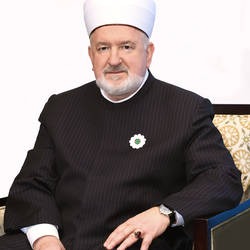
Mufti Dr. Mustafa Cerić
Member of the Council of Interfaith, Salvator Mundi Global
Former Grand Mufti of Bosnia and Herzegovina, serving from 1993 to 2012, Islamic scholar and one of Europe’s leading voices for interfaith dialogue and reconciliation.


Comments