
Women in the Qur'anic Prespective: Equality and Dignity, Rights, and Responsibilities as Civilazational Advantages of Islam.
Updated: 4 days ago
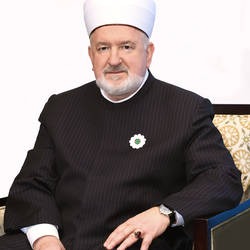
By Mufti Mustafa Cerić
The status of women constitutes one of the most significant questions in the history of human civilization. The manner in which different societies, philosophical schools, religious traditions, and political systems have understood women has often reflected their broader conception of human dignity itself. A historical survey of human thought reveals that women, throughout long periods of history, were subjected to various forms of marginalization, discrimination, and legal subordination. Within this context, the Qur’anic view of women represents one of the most remarkable anthropological and civilizational turning points in the history of humanity.

Numerous thinkers of both the ancient and modern worlds left behind views that today invite serious criticism because of their negative attitudes toward women. In ancient Greece, often regarded as the cradle of European philosophy, women did not enjoy full social and political equality. Aristotle considered women inferior to men, describing them as an “incomplete” or “defective” form of human being. Such perceptions were not merely philosophical speculations but reflected a broader social environment in which women were largely excluded from public life.
Nor did many later European thinkers move significantly beyond such assumptions. Jean-Jacques Rousseau regarded a woman’s primary purpose as serving men and raising children, while Friedrich Nietzsche often wrote about women in ways that reflected deeply rooted prejudices of his era. Even the rise of modern European civilization did not automatically result in the full affirmation of women’s rights. The right to vote, access to higher education, and economic independence were secured by women in many Western societies only after long political and social struggles during the last few centuries.
Similar, and in some cases even more severe, forms of discrimination can be found in many other ancient cultures. In certain societies, women could be traded, pledged as security for debts, or treated as inheritable property. In some parts of the world, widows were expected or compelled to sacrifice themselves upon the death of their husbands, while elsewhere women were denied the ability to exercise independent control over their own lives and property.
A particularly illustrative example is pre-Islamic Arabia. The Qur’an describes a social atmosphere in which the birth of a daughter was regarded by some tribes as a source of shame and humiliation: “And when one of them is informed of the birth of a female, his face darkens, and he suppresses grief.” (Qur’an 16:58)
The most tragic expression of this mentality was the practice of female infanticide, which the Qur’an unequivocally condemned as a grave moral crime.
It was into such a historical and civilizational environment that Islam emerged with its transformative message of the common origin of humanity, the equality of human dignity, and the shared moral responsibility of all people before God. The Qur’an does not present man and woman as beings of unequal human worth but rather as two manifestations of the same human reality. This foundational anthropological principle is expressed in the verse: “O mankind, be mindful of your Lord, who created you from a single soul and created from it its mate, and from the two spread many men and women.” (Qur’an 4:1)
This verse establishes the principle of the common origin of all humanity. Men and women are not two categories of beings possessing different degrees of dignity; rather, they are two expressions of the same human nature. In doing so, the Qur’an dismantles many ancient assumptions that regarded women as ontologically inferior or secondary in purpose and existence.
This principle of equality is further reinforced in the verse: “Indeed, the most noble of you in the sight of God is the most God-conscious among you.” (Qur’an 49:13)
According to the Qur’an, a person’s worth is not determined by sex, race, ancestry, social status, or material wealth. The only true measure of excellence is piety, moral integrity, and awareness of one’s responsibility before God. This principle constitutes one of the central foundations of Islamic ethics and social philosophy.

The Qur’an consistently emphasizes the spiritual equality of men and women. In Surah al-Ahzab, it declares: “Indeed, the Muslim men and Muslim women, the believing men and believing women, the obedient men and obedient women, the truthful men and truthful women, the patient men and patient women, the humble men and humble women, the charitable men and charitable women, the fasting men and fasting women, the men who guard their chastity and the women who guard theirs, and the men who remember God often and the women who do so—God has prepared for them forgiveness and a great reward.” (Qur’an 33:35)
Men and women are mentioned side by side in every major spiritual and moral virtue. Reward and accountability are linked not to gender but to faith and righteous action. Similarly, the Qur’an states: “I will never allow the work of any worker among you to be lost, whether male or female; you are of one another.” (Qur’an 3:195) This verse affirms that men and women are equally valuable bearers of moral responsibility and equally capable of attaining God’s pleasure.
The Prophet Muhammad ﷺ further emphasized this principle when he said: “Women are the counterparts (or twin halves) of men.” This Prophetic statement became one of the foundational principles of the Islamic understanding of relations between the sexes. A woman is not an object of ownership nor merely a means for fulfilling the interests of others; she is a full member of the human community, endowed with her own dignity, rights, and responsibilities.
The historical significance of these principles becomes even clearer when viewed through the concrete rights Islam granted to women. At a time when women in many parts of the world lacked basic legal personality, Islam recognized their right to inheritance, ownership and management of property, contractual capacity, education, choice in marriage, and protection of personal dignity. Within Islamic law, a woman retains her legal and economic independence even after marriage—a principle that became widely accepted in many other civilizations only centuries later.
At the same time, the Isla mic conception of equality does not necessarily imply complete sameness in every social role. The Qur’an acknowledges certain natural distinctions between the sexes but does not transform those distinctions into a hierarchy of human worth. Equal dignity does not require identical functions; rather, it signifies equal human value, equal moral responsibility, and equal access to God’s mercy and reward.
It is precisely here that one of the greatest civilizational strengths of the Islamic worldview may be found. While many cultures throughout history viewed women as burdens, temptations, possessions, or inherently inferior beings, the Qur’an presented women as full human persons, moral agents, and vicegerents of God on earth. Islam did not affirm women because they were needed by the economy, the labor market, or political interests; it affirmed their dignity because that dignity is an integral part of God’s order of creation.
For this reason, the question of women in Islam cannot be reduced merely to a social or political issue. It is fundamentally a matter of theological anthropology and the understanding of what it means to be human. The Qur’anic message established the principle that men and women are created from the same essence, equally accountable before God, and equally capable of attaining moral excellence. In a world shaped by deep prejudices against women, such a teaching represented a profound civilizational transformation whose significance transcends time and place.

It may therefore be concluded that the Qur’anic affirmation of women’s full human dignity, spiritual equality, legal personhood, and moral responsibility constitutes one of the most important achievements of Islamic civilization. It was not merely a correction of particular social injustices but a fundamental reorientation of humanity’s understanding of the human person and his or her place in the world. In this lies one of the enduring values of the Islamic message and one of its most significant contributions to the history of human civilization.
About the Author

Mufti Dr. Mustafa Cerić
Member of the Council of Interfaith, Salvator Mundi Global
Former Grand Mufti of Bosnia and Herzegovina, serving from 1993 to 2012, Islamic scholar and one of Europe’s leading voices for interfaith dialogue and reconciliation.
©2026 by Salvator Mundi Global Limited | Powered by Ethics™


Comments