
HUMANITY CANNOT SURVIVE ON INDIFFERENCE
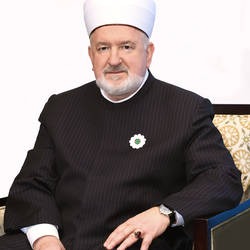
The words spoken this week by Pope Leo XIV in the Vatican deserve attention far beyond religious circles. Addressing participants of the Eighth Colloquium between the Dicastery for Interfaith Dialogue and the Royal Institute for Inter-Faith Studies from Amman, the Pope delivered a message whose importance reaches beyond diplomacy and theology. It was a warning about the moral condition of today’s world.
“Christians and Muslims,” the Pope said, “are called to a common mission: to revive humanity where it has gone cold, to give voice to those who suffer and to transform indifference into solidarity.”
Few sentences describe our age more precisely.

We live in a world of astonishing technological progress and simultaneous moral decline. Humanity has never been more connected materially, yet more divided emotionally, politically, and spiritually. Wars are livestreamed. Human suffering is consumed daily as content. Refugees become statistics. Civilians become collateral damage. The poor become invisible.
The greatest danger today is not only violence itself.
It is the normalization of indifference.

This message resonates deeply in Bosnia, where memories of suffering are not abstract history but living reality. Bosnia understands what happens when people stop recognizing one another’s humanity. We know how quickly fear, nationalism, and political manipulation can transform neighbors into enemies.
But Bosnia also knows something else: coexistence is possible.
Not easy coexistence. Not romanticized coexistence. But coexistence built on the understanding that no society can survive imprisoned in permanent hatred.
That is why the Vatican gathering matters.
Christians and Muslims met not to compete over history or suffering, but to ask how humanity itself may still be defended in a world increasingly shaped by dehumanization. Across continents we witness the erosion of empathy. Public discourse rewards outrage more than wisdom. Social media amplifies humiliation faster than compassion. Entire generations grow up surrounded by anxiety, division, and exhaustion.
In such a climate, the Pope’s call “to revive humanity where it has gone cold” sounds almost revolutionary.
Coldness is the spiritual illness of our age. People overwhelmed by endless crises become emotionally number. Compassion grows tired. Indifference becomes a survival mechanism.
Yet civilizations cannot endure once indifference becomes normal.
History teaches that societies rarely collapse only because of external enemies. They collapse internally when human beings lose the capacity for love, mercy, dignity, and solidarity.
This is why interfaith dialogue matters. Christianity and Islam together shape the moral imagination of more than half of humanity. If these traditions choose hostility, the world becomes more dangerous. But if they rediscover their shared ethical foundations: compassion, justice, mercy, protection of the weak, they can become a force against the growing culture of hatred and division.
An equally symbolic gesture came from the Vatican this week when, according to Iran’s IRNA agency, Pope Leo XIV awarded the “Ordine Piano,” one of the Holy See’s highest diplomatic honors, to Iran’s ambassador to the Vatican, Mohammad Hossein Mokhtari, recognizing efforts toward dialogue and peace.

At a moment when the Middle East stands dangerously close to wider confrontation, this gesture sends a clear message: dialogue must remain possible even between worlds burdened by mistrust and conflict.
And suffering today is immense.
From Gaza to Ukraine, from Libanon to Sudan to refugee camps forgotten by the international media, millions endure war, displacement, hunger, and humiliation. Yet global reactions increasingly depend on political convenience. Some victims are visible. Others disappear into silence.
This selective morality is one of the deepest crises of modern civilization.
The Pope’s appeal “to give voice to those who suffer” directly confronts that hypocrisy. Human suffering must never depend on religion, nationality, or geopolitical usefulness. The dignity of a child does not belong to political camps.
Solidarity is not sentimentality. It is moral courage.
It means refusing to accept cruelty as inevitable. It means resisting propaganda, resisting dehumanization, and refusing to reduce human beings into categories.
For Bosnia, this message carries particular weight. Mosques, churches, synagogues, and cathedrals standing within walking distance of one another symbolize something the modern world desperately needs to rediscover: different identities can share the same human space without destroying one another.
That possibility must not be abandoned.
Because the alternative is already visible everywhere: fragmentation, radicalization, loneliness, hatred, and permanent instability.
The future will not be saved by technology alone. Artificial intelligence cannot teach mercy. Markets cannot create conscience. Military power cannot build trust.
Only human beings can do that.
Perhaps this is what Pope Leo XIV tried to remind the world this week in Rome: civilization survives not when it becomes more powerful, but when it remains capable of love and compassion.


Comments