
We Have Been Here Before: The Future Looks Different. Humanity Does Not.
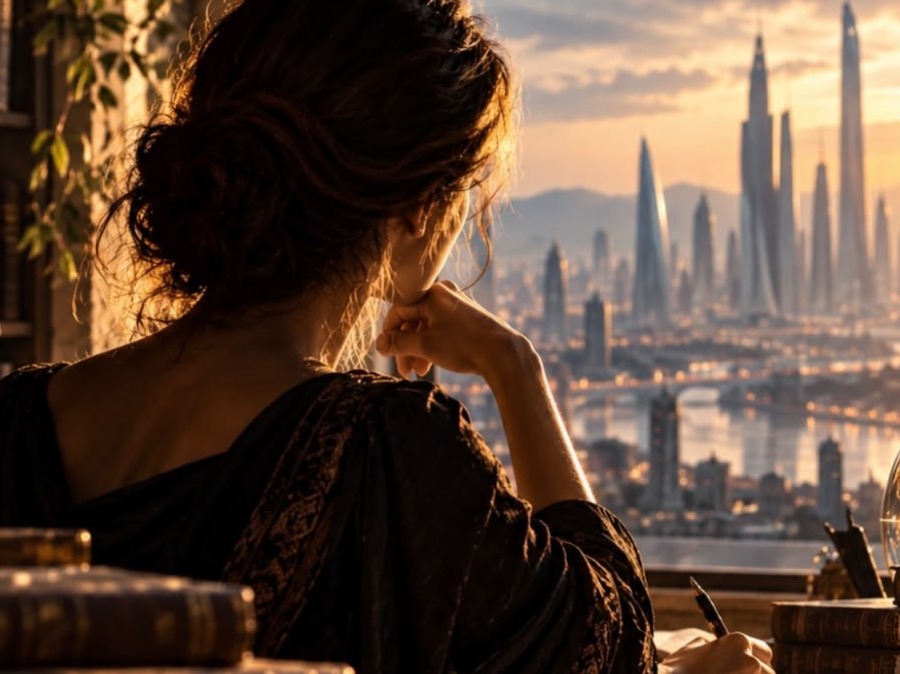
Five centuries of progress have changed almost everything around us. The questions we ask in the dark have hardly changed at all.
Imagine waking up five hundred years ago.
There is no electricity. No internet. No artificial intelligence. No airplanes crossing continents overnight. No television, antibiotics or smartphones.
For most people, the world ends not far beyond the horizon they can see. News travels slowly. Knowledge belongs to the few. The night is truly dark.
It seems like another world.
And yet, if you could sit quietly in a marketplace, enter a family home, listen to conversations in a tavern or observe those gathered around the tables of power, something might feel strangely familiar.
Parents worry about their children. The young believe the old do not understand them. The old fear that the world is changing too quickly.
People complain about those who govern them. The wealthy worry about losing what they possess. The poor wonder why so much belongs to so few. New ideas excite some and frighten others.
People argue about faith.
They argue about borders.
They argue about morality.
They fall in love. They betray one another. They search for recognition. They envy. They forgive.
They fear illness.
They fear loneliness.
They fear death.
And somewhere, someone looks into the night and wonders what all of this means.
Five hundred years later, almost everything around us has changed.
But have we?
The World Changes. The Questions Remain.
We like to imagine history as a road. Behind us lies the primitive world. Ahead of us lies progress. The farther we travel, the more advanced we become.
There is some truth in this. Human achievement is extraordinary.
We have learned to fly. We have walked on the Moon. We can see inside the human body, communicate across the planet in seconds and access more knowledge from a device in our hand than entire civilisations once possessed.
We are now building machines capable of tasks that, until recently, seemed to belong exclusively to human intelligence. We may soon extend human life far beyond what previous generations thought possible. We may travel to other planets. We may create things for which we do not yet have names.
But beneath this extraordinary progress lies an uncomfortable observation.
Our tools have changed much faster than we have.
The human being holding the smartphone is not fundamentally different from the human being who once held a quill.
We still desire. We still fear. We still compete. We still love.
We still search for belonging.
We still want to be seen.
We still want to matter.
And we are still capable of extraordinary compassion and extraordinary cruelty.
Technology has transformed the stage. It has not necessarily transformed the actors.

Every Generation Believes It Is Different
There is another curious habit of humanity. Every generation seems convinced that it is living through unprecedented change.
And, in one sense, every generation is correct.
The printing press changed the distribution of knowledge.
Industrialisation transformed work, families and cities.
Railways changed our relationship with distance.
Electricity changed our relationship with time.
Radio and television changed our relationship with information.
The internet changed our relationship with almost everything.
Now artificial intelligence may change our relationship with intelligence itself.
The technologies are different. The human reaction is remarkably familiar: excitement, fear, resistance, opportunity, confusion.
Those who believe the new world will solve everything. Those who believe the new world will destroy everything. And the much larger number of people simply trying to understand where they belong within it.
We have been here before. Not in precisely the same place, but facing the same human dilemma:
How do we embrace what is coming without losing something important from what came before?

More Information. More Truth?
Consider information.
There was a time when knowledge was scarce. Books were precious. Libraries were limited. Education belonged largely to privileged groups.
Today, humanity faces almost the opposite problem. Information is everywhere. We wake up to it. We carry it in our pockets. It follows us through our day. News, opinions, images, arguments, predictions, advertisements, entertainment and outrage compete continuously for our attention.
We know more. But are we wiser?
We communicate more. But do we understand one another better?
We are more connected. But are we less lonely?
We have more voices. But is truth easier to recognise?
Abundance may create its own form of poverty.
When information becomes infinite, attention becomes scarce. And when everyone can speak, listening becomes a discipline.

Machines Have Always Changed Us
Human beings have long worried about machines.
When machines entered factories, people wondered what would happen to work. When cars replaced horses, entire ways of life disappeared. When computers entered offices, professions changed.
Today we ask what artificial intelligence will do to writers, teachers, doctors, lawyers, artists, engineers and countless others.
It is an important question. But there is another.
We constantly ask whether machines will become more like human beings. We should also ask whether human beings are becoming more like machines.
Faster. More efficient. Constantly available. Continuously measured. Always producing. Always responding. Always connected.
When did doing nothing become uncomfortable?
When did silence become something we needed to fill?
When did a moment become incomplete unless it was photographed, posted, measured or shared?
Technology does not merely change what we do. Eventually, it changes what we expect from ourselves.

The Old Conflict Between Generations
Then there are the young and the old: one of humanity's oldest disagreements.
Older generations look at younger people and worry that discipline, patience, respect or resilience are disappearing. Younger generations look at those before them and wonder how they can possibly understand a world that no longer exists.
Both may have a point. And both may be mistaken.
The young inherit a world they did not create. The old carry experience from a world that is disappearing. One has time without experience. The other has experience with less time.
Civilisation may progress not when one replaces the other, but when the two remain in conversation.
A society obsessed only with youth risks forgetting. A society controlled only by age risks refusing to change.
The future needs imagination. But imagination without memory can be dangerous.

Progress Is Not the Same as Wisdom
This may be the distinction our century needs most.
Progress asks: can we do it? Wisdom asks: should we?
Progress asks how quickly something can be built. Wisdom asks what happens after it is built. Progress measures what we gain. Wisdom remembers to ask what we might lose.
Human history holds countless examples of our ability to invent faster than we understand the consequences of our inventions. And today the distance between invention and consequence is growing shorter.
Artificial intelligence. Genetic engineering. Human longevity. Surveillance. Autonomous systems. The manipulation of information. And technologies we cannot yet imagine.
For the first time, questions once reserved for philosophers are becoming engineering decisions.
What is intelligence? What is consciousness? What is human? What is natural?
What should never be changed? What should never be created?
What does privacy mean?
Who decides?
These are no longer questions that belong only to books. They are becoming questions of everyday life.
The Things That Refuse to Become Obsolete
And still, beneath all of this, there are things technology cannot easily answer.
How much is enough?
What makes a life meaningful?
Why can someone surrounded by people feel completely alone?
Why does power change some people and reveal others?
Why do societies repeatedly divide themselves into "us" and "them"?
Why do human beings sometimes defend beliefs more fiercely than facts?
Why can forgiveness be harder than revenge?
Why do we spend so much of our lives preparing for a future that eventually becomes a past?
And why, knowing that our time is limited, are we so talented at wasting it?
Perhaps these questions survive because they are not problems waiting to be solved. They are part of the condition of being human.
Five Hundred Years From Now
Leonardo da Vinci lived more than five centuries ago. The physical world around him would appear almost unimaginably distant to us, and ours would probably appear magical to him. Yet many of the questions surrounding the human being in his time would not be unfamiliar today.
Five hundred years from now, our descendants may look back at us with the same mixture of fascination and disbelief with which we look at the past.
They may smile at our primitive technologies. They may struggle to understand our wars. They may wonder why we tolerated things that seemed perfectly normal to us.
They may live for 150 years. They may share their world with forms of intelligence we cannot presently imagine. They may travel beyond Earth and understand the universe in ways unavailable to us.

And somewhere, in that extraordinary future, one person will sit alone for a moment.
Without a machine answering for them.
Without an audience watching.
Without an algorithm suggesting what they should think next.
And they will ask:
Who am I?
What is a good life?
What do I owe another human being?
What is true?
What is enough?
What should I leave behind?
And what will remain of me when I am gone?
The future will not make these questions disappear. Perhaps no future ever could.
Because the questions we have been asking for thousands of years are not evidence that humanity has failed to find the answers. They are evidence of something else.
Civilisations change. Technologies change. Borders change. Beliefs change. The future changes.
But the search for meaning remains.
And perhaps that search is one of the few things that has always made us human.
About the Author

Mona Lisa
Columnist, Salvator Mundi Times
Mona Lisa writes under a pen name, keeping her identity private. Her essays explore history, human nature and the questions of meaning, responsibility and wisdom that remain as technology changes the world.


Comments