
Why Sweden Became the Ground I Build From
Updated: 4 days ago
Takahisa Karita on why one small northern country has become the place where he is testing an idea he has argued for in these pages: that the next era belongs not to new specialisms, but to those who can connect the ones we already have.

I have spent much of my working life reading business plans written by people I have never met, in countries I may never visit. What those documents taught me was not what I expected. Ideas rarely fail because they are wrong. They fail because they are alone.
A researcher holds a discovery but not the capital to develop it. An investor holds the capital but not the regulatory path. A municipality holds the land, the industrial history and the political will, and has never been introduced to either of them. Everyone involved is competent. Nothing connects them.
I have written in these pages about the Integrator Entrepreneur, the figure whose contribution is not another specialism but the ability to translate between the specialisms that already exist. Sweden is where I am now testing that argument in practice, and I want to explain why.
Why this country

The honest answer is not sentiment. It is fit.
Sweden holds several things at once that are usually found apart. It has genuine scientific depth in life sciences and medical technology. It has an industrial base with a long engineering memory, the kind of knowledge that cannot be acquired quickly. It has treated sustainability as an ordinary condition of doing business rather than as a department. And it has a public culture that regards entrepreneurship as legitimate rather than suspect.
My own work runs across technology, biotechnology, healthcare, pharmaceuticals, finance and education. In most countries those fields sit in separate rooms. In Sweden they are close enough to speak to each other, and, more importantly, there is a habit of them doing so. Research, business and public institutions in this country are used to sitting at the same table and contributing different kinds of expertise to the same problem.
That habit is the asset. It cannot be legislated into existence, and it is the reason I am here.
A platform needs a place

UNIPLAT, which I co-founded and which is operated by Unify Platform AG in Switzerland, exists to connect entrepreneurs and researchers working towards the United Nations Sustainable Development Goals. As of May 2025 it reported more than 160,000 members in 146 countries, over 100 partner organisations and more than 80 advisory board members.
Those numbers describe reach. They do not, by themselves, describe results. A network that connects people only on a screen produces conversations. To produce projects, it needs ground: laboratories, regulators, municipalities, capital, people who can be met in person.
That is why, in March 2025, we established UNIPLAT SKANDINAVISKA AB in Stockholm, to work with highly specialised researchers and entrepreneurs. The Swedish company has since begun work involving the research, development and licensing of new medicines, which places it directly inside the life sciences sector rather than adjacent to it. This is the difference between having a presence in a country and having a position in it.
The layer everyone forgets
International strategy tends to be discussed at the level of nations, and executed at the level of cities.

During a recent visit, a Japanese delegation and I met representatives of Södertälje municipality, its business office, SBB and Södertälje City, to discuss entrepreneurship, research and the possibility of future establishments connected to UNIPLAT. We are very interested in Södertälje as a possible global base. It is an international city where more than ninety languages are spoken, with deep industrial roots and a clear innovative power.
I want to be precise about why that matters. A municipality is not a symbolic partner. It is the layer that can introduce a foreign organisation to local companies, to researchers, to physical facilities and to public bodies, and can do so quickly because those relationships already exist. National agreements create permission. Municipal relationships create projects.
Agriculture, medicine, and an instrument that makes intent real
The second connection runs through Stark Global Japan, where I serve as CFO and CMO. In January 2026 the company entered into a Letter of Engagement with Business Sweden's Commercial and Investment Section at the Embassy of Sweden.
The engagement concerns a plant factory and Crop Mobility project in Sweden, which we are considering as a global base. Stark Global Japan's wider work covers food resource production, agricultural systems and the development and supply of active pharmaceutical ingredients.
What the agreement provides is not publicity. It provides structure: expected activities, a proposed timeline and a clear statement of the support Business Sweden may offer. Intentions between countries are common and cheap. Instruments that specify what happens next are rare, and they are what turn an intention into a schedule.
It is also worth noticing what this single engagement touches: agriculture, medicine, sustainability and international investment. Those are four separate ministries in most governments. Here they are one project.
The long horizon
I am not trying to enter a market. Entering a market is a transaction, and transactions end.
What I am trying to build is a standing connection between Japanese and European researchers, founders, companies, investors, universities and governments, so that when one of them holds a piece of a problem, finding the others is no longer a matter of luck. Stockholm, Södertälje and the work with Business Sweden are the first structural elements of that connection.

I believe the next generation of global business will be built not inside borders but across them. Not because borders have ceased to matter, but because the problems worth solving have never respected them, and the knowledge required to solve them has never been held in one place.
Specialisation built the modern world. Connecting it will build the next one. Sweden, for reasons that have taken me some years to understand, is an unusually good place to begin.
A version of this account was published by The European Business Review on 11 August 2026. Read it at The European Business Review.
About the Author

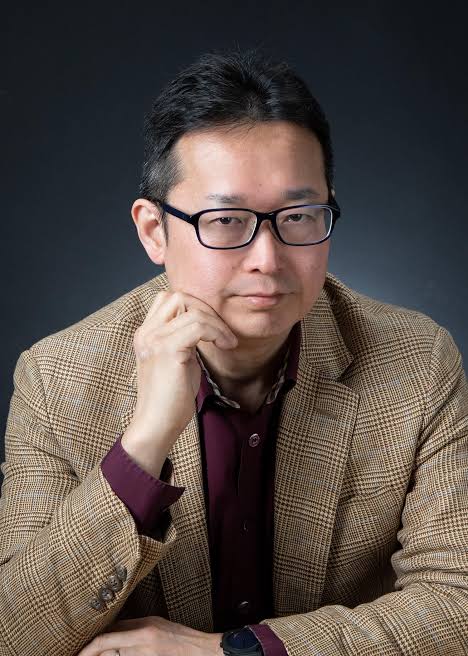
Dr. Takahisa Karita
Chairman of the Global Council of Entrepreneurial Mentorship, Salvator Mundi Global
Dr. Takahisa Karita is Co-Founder and CFO/COO of UNIPLAT, a global platform connecting researchers, entrepreneurs, investors, and innovators across more than 140 countries. He is a member of Forbes Business Council, Advisory Board Member of the Peace-Led Climate Friendly Sustainable Development Forum, and Japan Head of the BRICS Cooperation Hub. Takahisa specializes in global entrepreneurship, international venture development, and building cross-border innovation ecosystems.
Found this valuable? Share it with someone who should read it.


Comments